zurück
Home |
AML
akute myeloische Leukämie: Therapie |
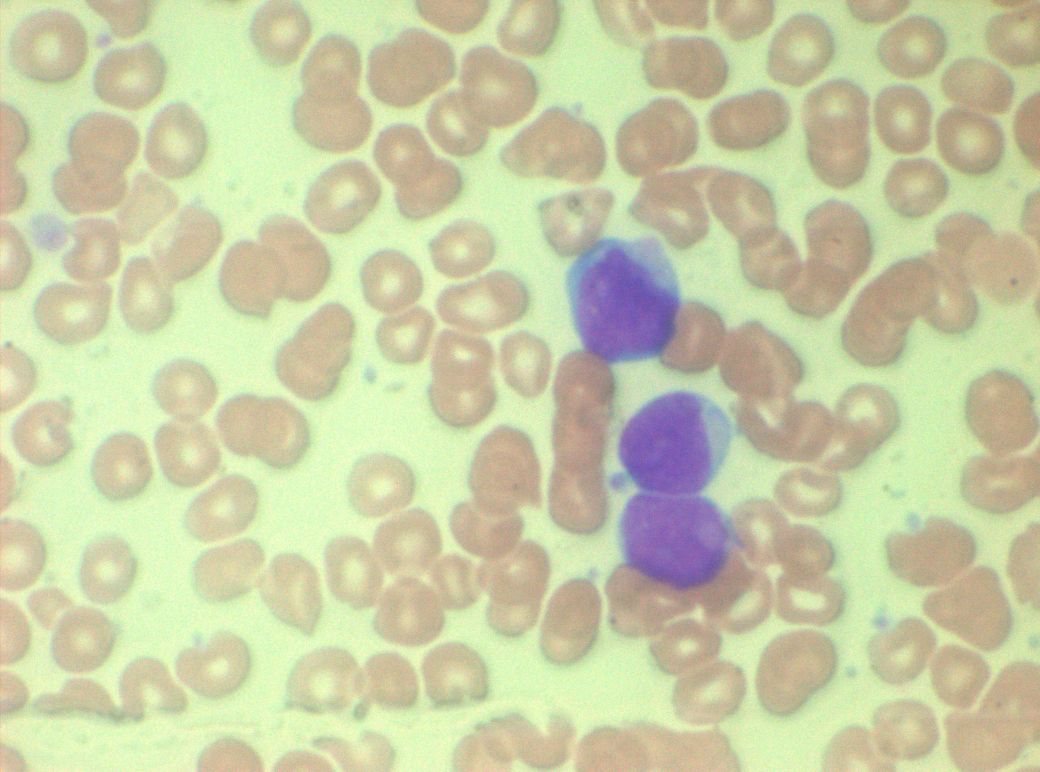
peripheres Blutbild |
Allgemeines |
|
Primärtherapie |
Jüngere fitte Patienten |
intensive Induktionschemotherapie |
dann konsolidierende Chemotherapie, allogene Stammzelltransplantation (HSCT) |
Ältere Patienten |
Daunorubizin - Cytarabin. 40-50% erzielen eine komplette Remission. |
Induktion: Daunorubizin Tag 1-3, Cytarabin Tag 1-7 |
| Induktion |
Anthracycline (Daunorubicin oder Idarubicin) und Cytarabine (7 / 13 Regime) |
CR: 60% (1) |
Mit Dosiseskalation CR bis 70%-80% |
NCRI AML18 |
Geeignet für Patienten ab 60a. Ft für intensive Chemotherapie. Keine Blastentransformation oder acute Promyelozytenleukemie. |
| HMA |
Hypomethylierende Medikamente |
Azacitidine, Decitabine |
HMA / Venetoclax |
Standardtherapie für primäre AML älter als 75 Jahre oder nicht geeignet für Induktionchemotherapie |
Quizartinib, Vanflyta® |
In Kombination mit Cytarabin und Anthrazyklin-Induktion, Cytarabin-Konsolidierung, FLT3-Mutation |
G-BA 12/24: Zusatnutzen nicht belegt |
Teil von |
akute myeloische Leukämie |
Leukämie |
Maligne Systemerkrankungen |
spezielle Tumoren |
Onkologie |
Quellen |
1.) Rai KR, Holland JF, Glidewell OJ, et al.:
Treatment of acute myelocytic leukemia: A study by cancer and leukemia group B.
Blood 1981;58:1203-1212
|
 |